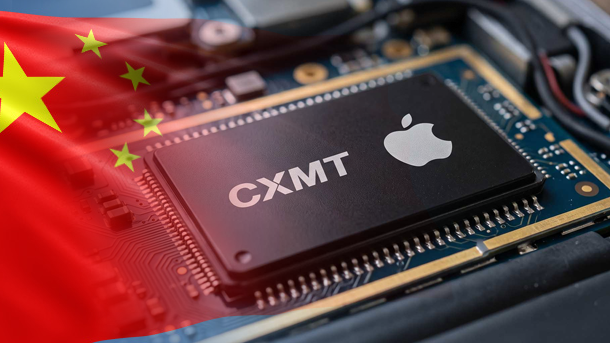
The global hardware condition is experiencing a truly real tectonic shift. For the first time, technology giant Lenovo has reportedly started embedding Solid-State Drives (SSD) made by Yangtze Memory Technologies (YMTC)—a manufacturer from China—into their global line of business laptops, including those sold in the United States market.
This bold step was taken by Lenovo to secure unit stock so that it doesn’t give up in the midst of the world’s increasingly severe memory chip shortage crisis.
AI Server Takes Share of Consumer Components
For those of you who are confused about why the memory industry is suddenly shaking, the culprit is the explosion of the Artificial Intelligence (AI) trend.
Currently, memory giants such as Samsung, SK hynix, and Micron are getting a massive demand buff from the corporate sector. They prefer fishing rods to make fast memory for AI servers which have super big profits. As a result, the production line for “regular” memory chips for gaming laptops, mainstream PCs and everyday laptops was deliberately sacrificed. Because supply was tight and market prices were starting to become inconsequential, Lenovo was forced to look for an alternative to YMTC in order to save their supply chain
Also read this:
» Lenovo Idea Tab Pro Gen 2 Review: Laptop-Taste Android Tablet with PC-Level AI and WPS Office Features
» Lenovo Provides End-to-End AI Enterprise Solutions to Accelerate Business Transformation in Indonesia
» SanDisk Releases New SSD, Same Price as Buying 5 PlayStation 5s?!
» Gas Pol! Lenovo Legion is the main weapon in the 2026 F1 Sim Racing World Championship
» Lenovo Yoga Tab Launching Soon in Indonesia: Light AI Tablet for Unlimited Creativity
Looking for Ways to Break Through US Government Obstacles
Lenovo’s move is actually considered reckless and risks triggering geopolitical drama. YMTC has been on the US Department of Commerce’s trade blacklist (Entity List) since 2022 due to security issues.
But Lenovo is smart at finding exploit loopholes. The US sanctions prohibit American companies from selling sensitive technology to YMTC, but do not prohibit finished YMTC products from being purchased by Lenovo (which is based in China) to be installed in their laptops and sold throughout the world. Even though it is safe under trade law, this laptop with an SSD will certainly be immediately auto-banned from tenders for procurement of goods for government agencies or the US military which are super strict.
This phenomenon is a loud alarm for memory market leaders from South Korea and America. Based on industry rumors, HP and Dell are now also secretly testing memory made by Chinese manufacturers. Apple even reportedly lobbied the US government to be allowed to use Chinese memory chips to secure their iPhone production.
On the positive side for our pockets, if this Chinese SSD succeeds in proving its durability in mass laptops like Lenovo, the competitive landscape will change. It is not impossible that in the future we will be presented with the option of upgrading a third party SSD which is much cheaper but has performance that is still playable for everyday use!
Apart from the main news above, KotakGame also has an interesting video which you can watch below.
PakarPBN
A Private Blog Network (PBN) is a collection of websites that are controlled by a single individual or organization and used primarily to build backlinks to a “money site” in order to influence its ranking in search engines such as Google. The core idea behind a PBN is based on the importance of backlinks in Google’s ranking algorithm. Since Google views backlinks as signals of authority and trust, some website owners attempt to artificially create these signals through a controlled network of sites.
In a typical PBN setup, the owner acquires expired or aged domains that already have existing authority, backlinks, and history. These domains are rebuilt with new content and hosted separately, often using different IP addresses, hosting providers, themes, and ownership details to make them appear unrelated. Within the content published on these sites, links are strategically placed that point to the main website the owner wants to rank higher. By doing this, the owner attempts to pass link equity (also known as “link juice”) from the PBN sites to the target website.
The purpose of a PBN is to give the impression that the target website is naturally earning links from multiple independent sources. If done effectively, this can temporarily improve keyword rankings, increase organic visibility, and drive more traffic from search results.