This story is part of The Engine Behind the Epic, Level Infinite’s feature series highlighting the teams supporting our partner studios behind the scenes.
Somewhere in Singapore, an artist is completing a character upgrade. By the time the file leaves the machine, the same model will have lived three lives: the in-game cinematic, the Steam key visual in the display case, and the printed Displate that fans hang on their walls. None of the results starts with a summary that says “use the same model.” That’s how the Infinite Creative Center, or ICC, cooks.
ICC is Level Infinite’s in-house creative team. Forty artists in the UK, Singapore and China with backgrounds ranging from film to AAA game development and advertising. Their creative ranges from co-development like cinematics, visual language, and technical art to marketing like trailers, key visuals, and in-game screenshots. This covers the duration of a game’s life cycle, from concept to the long release process. They sit inside the publisher, not outside as an agency, and that’s the whole difference.
We sat down with Richard Parnes, Director of the ICC, to explain how a kitchen really works. The metaphor is him: the studio makes the ingredients, ICC does the cooking, and the house rules are strict. Nothing is wasted.
In the kitchen, not at the door
When we asked Richard to name the biggest creative differences between being in-house and being an external agency, he didn’t hedge. The priority, he told us, is to help the studio sell as many units as possible. “That’s our focus.” In contrast, the external agency’s focus is “profits, EBITDA and rewards” for its own business. Cold framing but useful. This explains what the ICC can do that an agency cannot.
What it opens up is access. The studio allowed ICC into spaces that external vendors couldn’t reach within a hundred meters. Proprietary engine. Gate review conversation. “Studios don’t see us as just an entity trying to make money because we share the same north star.” Richard said.
Another thing it unlocks is the right to view the entire game. ICC is not just a supplier of marketing assets. The team worked on the cinematics built into the build, both real-time and pre-rendered cutscenes, technical optimization paths, visual language, and characters for storytelling. In ICC, the person who makes the trailer can also make the engine cinematic. This is what makes the nose-to-tail process possible.
Nose to tail
The line originates from the culinary world. The philosophy is simple: You respect your ingredients enough to ensure nothing goes to waste. ICC works the same way on a game. Improved character models for in-engine cinematics become the main visual heroes. Snippets from a trailer became the centerpiece of a how-to series on social media. Because ICC as ‘Chef’ sees the whole game as ‘Kitchen’, so they can always find second and third dishes.
“Diversification is key,” says Richard. The ICC’s strongest contributors are those who feel comfortable working holistically. He pointed us to Eric Leong, a senior animator on the team who joined in 2023 after years at Industrial Light & Magic, working on Marvel films and the Star Wars franchise. Eric’s current canvas requires a much more agile mastery. One week it’s a cinematic that tells the game’s story, the next week it’s a fifteen-second TikTok edit of gameplay footage that players watch on their phones. Eric’s transition and transcendence, from working purely in film to being able to work not only in game storytelling but also its advertising,” said Richard. “I think Eric and his role as a Swiss army knife is emblematic of what I would want for anyone at the ICC,”
It was a team that did a nose-to-tail job in practice. You need a chef who can switch from Hollywood-grade hero shots to quick social edits without losing track of the topic.
Into the Infinite display case, from inside the kitchen
That Into the Infinite Exhibition is one of the things Richard says the ICC is most proud of. The showcase format itself is nothing new. Xbox and PlayStation have been making long-term disclosures to publishers for years. The traditional way to do it is to fly to a stage in Germany, hire a film crew, set it up, shoot it, post it.
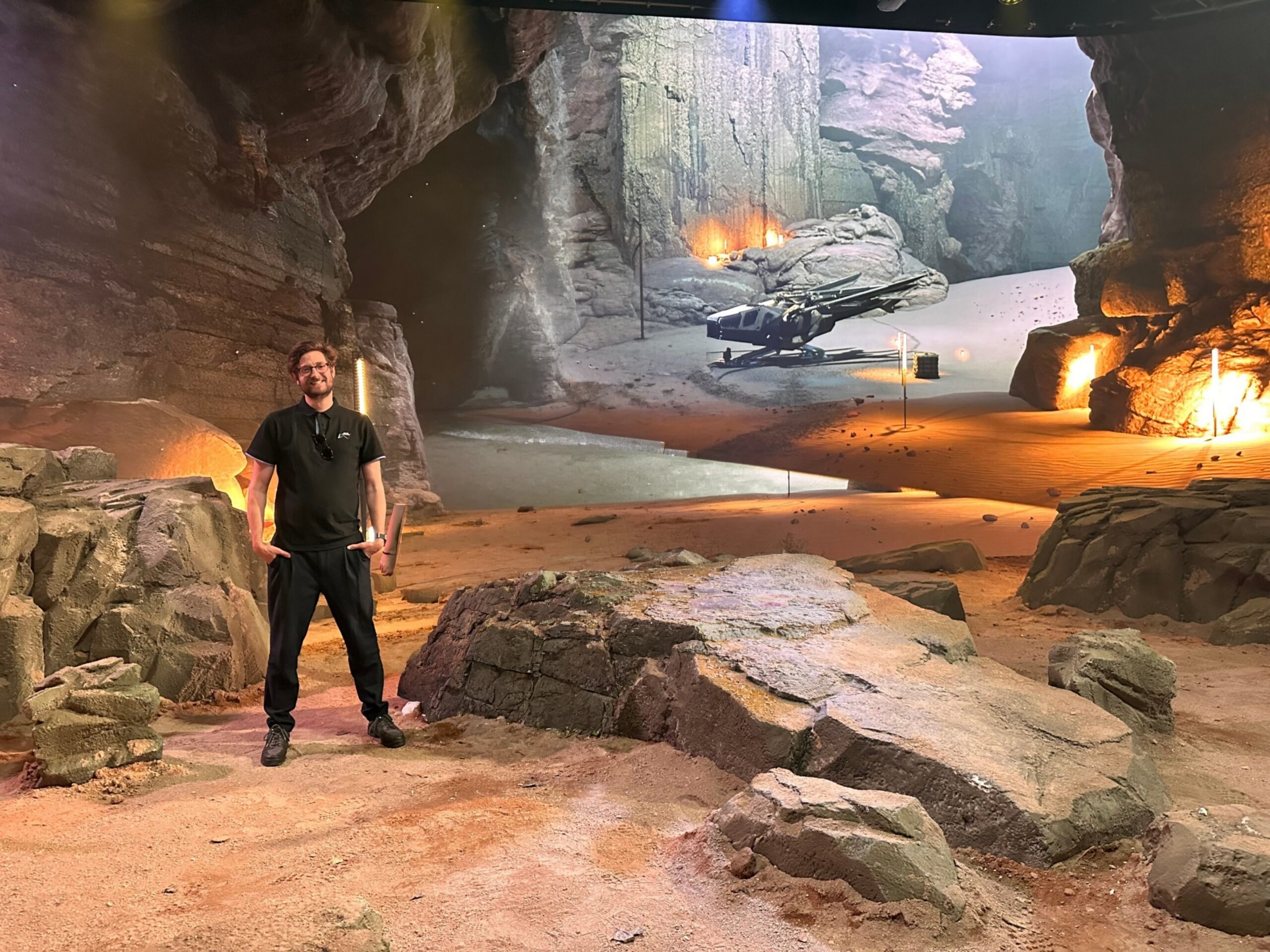
The ICC’s tone is different. Use the studio game world as a stage. The sets are already built, as the game is full of ready-made environments. Load these assets into Unreal Engine for the virtual production stage. Run camera tracking. Put the hosts, studio leads, and game directors in front of an LED wall, and let them explore the world they’ve created over the years while explaining it to us.
“What more authentic way to communicate a game world than to have developers walking around the game world talking to players?” Richard said. Funcom Chief Creative Officer Joel Bylos walked the virtual stage in Arrakis to talk about the game, and he said, “The entire Arakkis universe came to life. I was blown away!”
It is also a statement of creative identity for Level Infinite as a publisher. Most publishers demonstrate the credibility of the project with good production quality. That Into the Infinite Exhibition stand out by leveraging unique access: we own the studio, we own the world, and we’re confident enough to put developers on stage in their own work.
Dune: Awakening
By the time Joel finished his search on Towards Unlimited Exhibition 2024Funcom and ICC understand each other more clearly, and conversations continue.
What happens next: Chapters 1 and 2 of the in-game cinematic, then Chapter 3, and a major update to come, plus a series of special set cutscenes. Technical optimizations on the development side, Steam key visuals on the storefront, and a host of post-launch visual content.
The resulting story footage from the cinematic masterpiece was a highly performing asset for the game the following year, with a like ratio of 99% on YouTube after millions of views. The queue appeared because the trailer was made like a Hollywood story trailer, not a feature reel. “We tried to make it feel like Hollywood,” Richard said. Story snippets for immersive games.
The guide series for TikTok comes with different challenges. Dune: Awakening has a deep system worth articulating. Access stash, crafting, gear customization. A long trailer can’t teach you that. But a short and quick shortcut will do. The ICC’s approach is that a dense system becomes entertaining if you acknowledge the complexity and distill it cleverly. “The biggest sin in entertainment is being boring,” says Richard. “So how do we make it entertaining? That’s the magic sauce we’ve come up with.”
What the player brings
When a player watches something created by the ICC and doesn’t know that the ICC was involved, what feeling do we want them to walk away with? This is a cluster. Joy, sometimes. The fun is, if it’s a trailer for a game they want to play. Suspense, if that’s a horror beat. Most importantly, the feeling of wanting to go inside. The feeling that the door is open, and what’s on the other side is a world worth entering.
If ICC craft does its job, players never think about the kitchen. They look forward to the next plate.
――――――――――――――――――――――――――――――
The Engine Behind Epic is an Infinite Level series that uncovers the unsung heroes who empower our partner studios. Follow Unlimited Levels on TikTok, X, Facebook, Instagram and YouTube for more stories from the teams behind your favorite games.
PakarPBN
A Private Blog Network (PBN) is a collection of websites that are controlled by a single individual or organization and used primarily to build backlinks to a “money site” in order to influence its ranking in search engines such as Google. The core idea behind a PBN is based on the importance of backlinks in Google’s ranking algorithm. Since Google views backlinks as signals of authority and trust, some website owners attempt to artificially create these signals through a controlled network of sites.
In a typical PBN setup, the owner acquires expired or aged domains that already have existing authority, backlinks, and history. These domains are rebuilt with new content and hosted separately, often using different IP addresses, hosting providers, themes, and ownership details to make them appear unrelated. Within the content published on these sites, links are strategically placed that point to the main website the owner wants to rank higher. By doing this, the owner attempts to pass link equity (also known as “link juice”) from the PBN sites to the target website.
The purpose of a PBN is to give the impression that the target website is naturally earning links from multiple independent sources. If done effectively, this can temporarily improve keyword rankings, increase organic visibility, and drive more traffic from search results.